City Place I vs Random House Tower
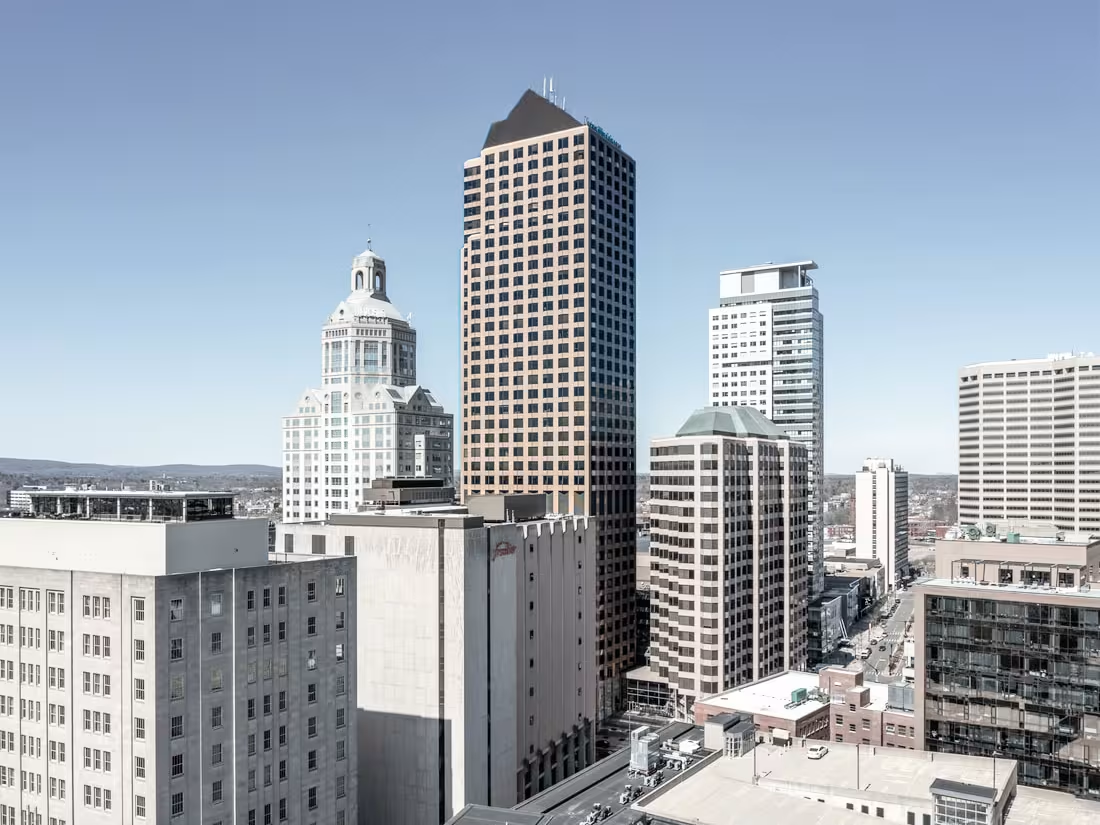
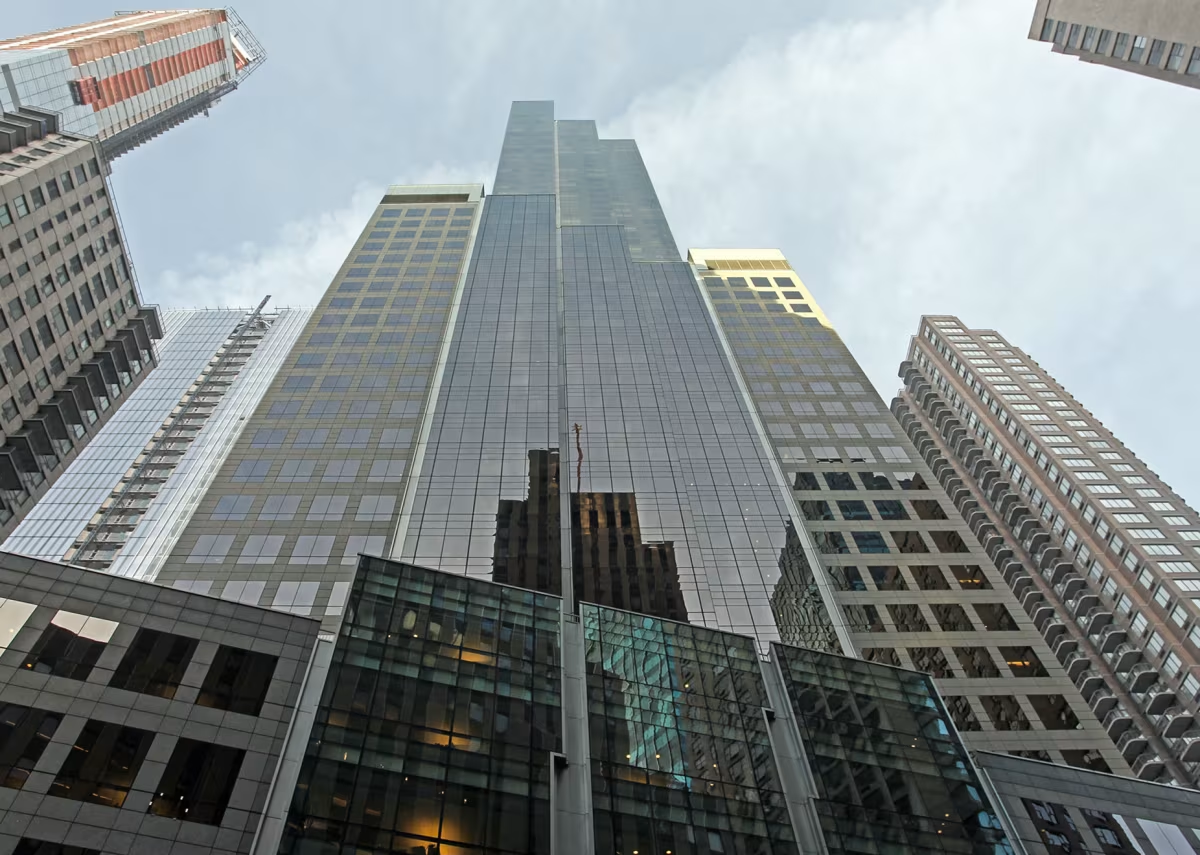
Comparing the City Place I and the Random House Tower is compelling because they were both designed by Skidmore, Owings & Merrill, yet they stand in different cities (Hartford, CT and New York, NY), and were completed a decade apart.
What this will allow us to see, is how the same firm's approach adapted to different places in different periods of time.
Height & Size
The Random House Tower is clearly the larger tower of the two, both in terms of height and number of floors. It rises to 682ft (208m) with 52 floors above ground, while the City Place I reaches 538ft (164m) with 38 floors above ground.
Of course, each project may have faced different briefs or regulatory constraints, which we don't really know about and could also explain the outcome.
Architectural Style
The City Place I was designed in the Modern style, while the Random House Tower reflects the principles of Contemporary.
The City Place I represents a late expression of the Modern, a style already in decline in 1984 when it was completed. By contrast, the Random House Tower followed the then mainstream Contemporary, embodying the dominant architectural direction of its time.
Uses
The Random House Tower follows a mixed-use model, combining commercial and residential. In contrast, the City Place I has remained primarily commercial.
The Random House Tower offers 101 residential units.
The Random House Tower also provides 150 parking spaces.
Structure & Facade
Both towers share the same structural solution, a Frame system.
A frame structure uses a grid of columns and beams to carry the building's loads. This frees the walls from structural duties, allowing for flexible floor plans and larger windows.
However, when it comes to the facade, both buildings use different approaches. The City Place I uses a Modular facade, while the Random House Tower uses a Curtain Wall facade.
A Modular facade like the one seen in the City Place I employs prefabricated panels, often mixing solid surfaces with smaller windows, while a curtain-wall facade like the one seen in the Random House Tower uses a lightweight glass curtain wall hung from the structure.
| City Place I | Random House Tower | |
|---|---|---|
| Skidmore, Owings & Merrill | Architect | Skidmore, Owings & Merrill |
| 1980 | Construction Started | 2000 |
| 1984 | Year Completed | 2003 |
| Modern | Architectural Style | Contemporary |
| Commercial | Current Use | Mixed |
| 38 | Floors Above Ground | 52 |
| 3 | Floors Below Ground | 2 |
| 164 m | Height (m) | 208 m |
| Frame | Structure Type | Frame |
| Steel | Vertical Structure Material | Steel And Reinforced Concrete |
| Concrete, Steel | Horizontal Structure Material | Reinforced Concrete |
| Yes | Facade Structural? | No |
| Granite, Glass | Main Facade Material | Glass, Steel, Aluminum |
| W.E. O'Neil Construction | Main Contractor | Plaza Construction Corporation |
| Skidmore, Owings And Merrill | Structural Engineer | Thornton Tomasetti |
| CT | State | NY |
| Hartford | City | New York |
| 185 Asylum Street | Address | 1739 Broadway |