555 California Street Building vs University Club Tower
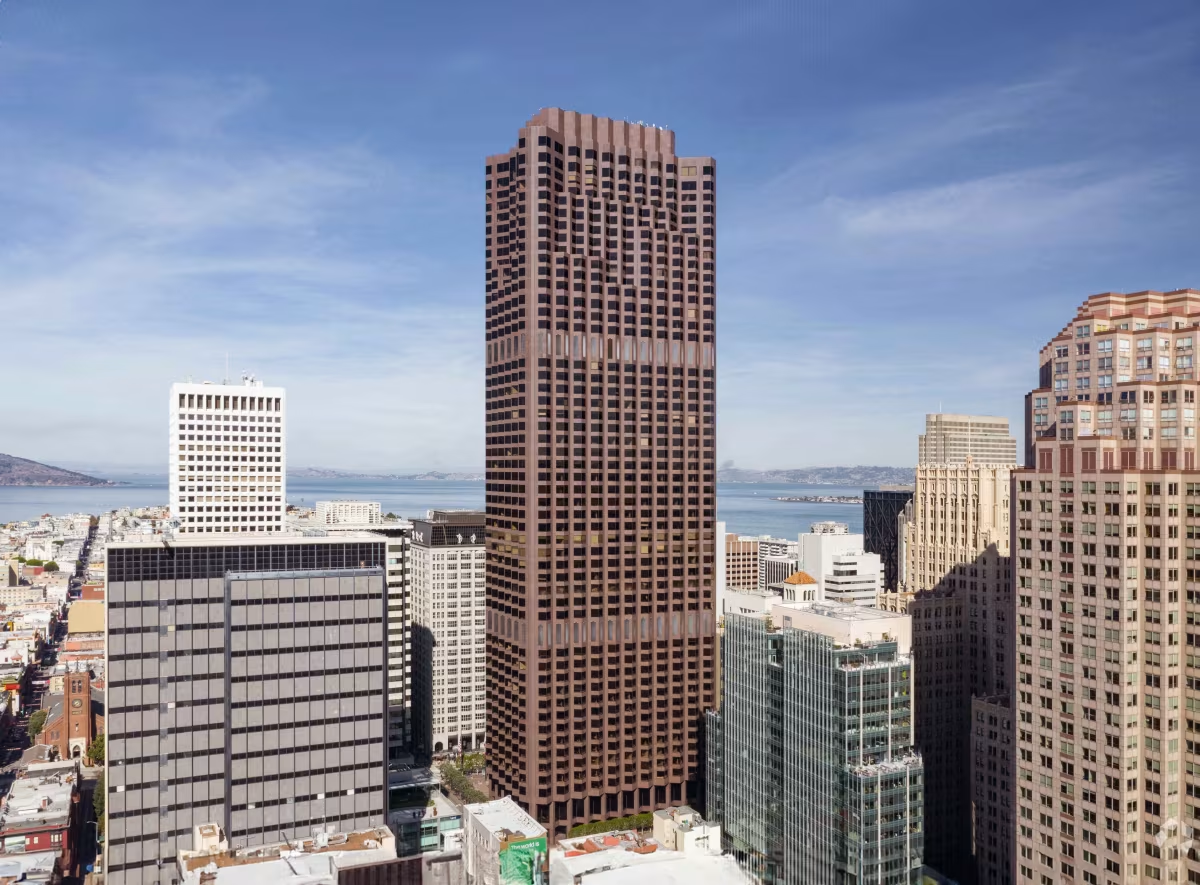
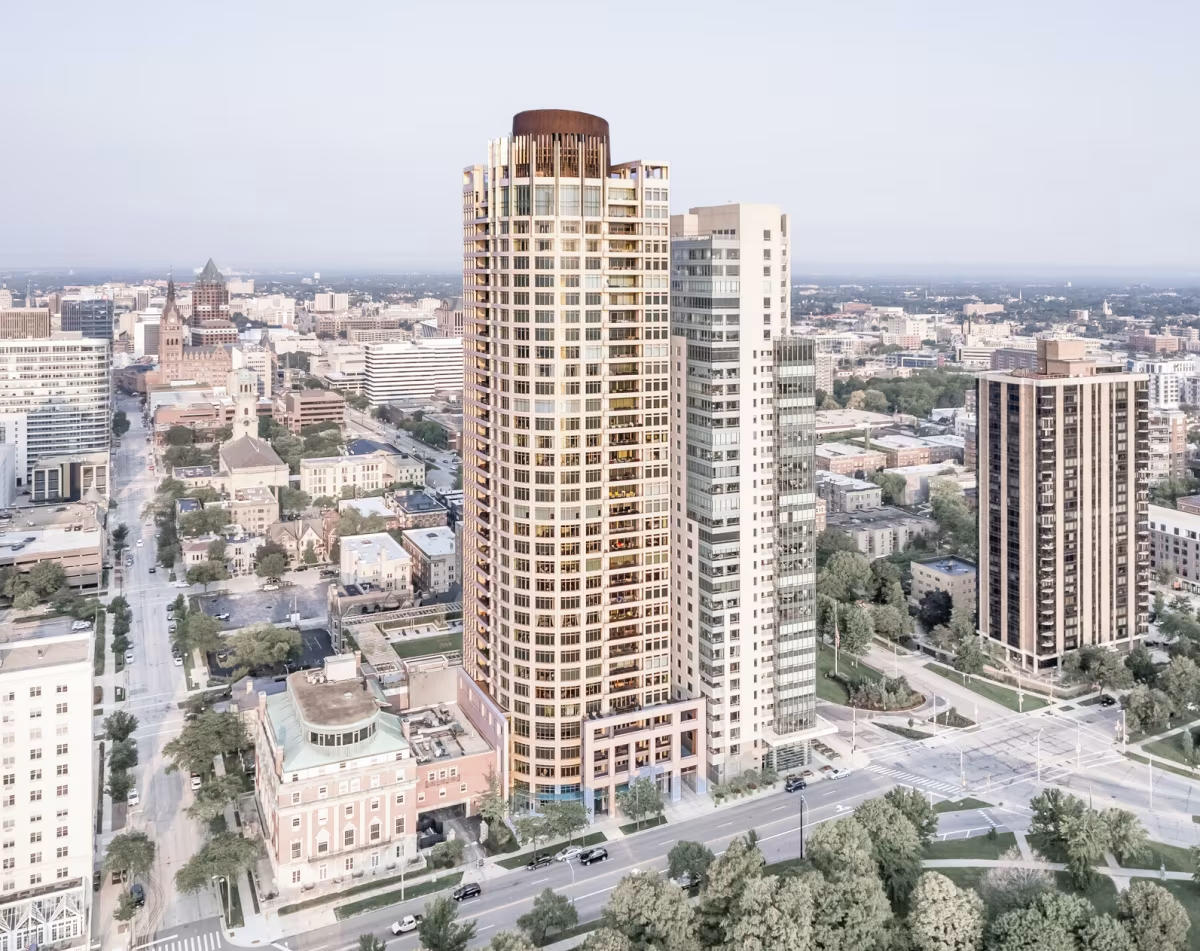
Comparing the 555 California Street Building and the University Club Tower is compelling because they were both designed by Skidmore, Owings & Merrill, yet they stand in different cities (San Francisco, CA and Milwaukee, WI), and were completed over two decades apart.
What this will allow us to see, is how the same firm's approach adapted to different places in different periods of time.
Height & Size
The 555 California Street Building is clearly the larger tower of the two, both in terms of height and number of floors. It rises to 778ft (237m) with 52 floors above ground, while the University Club Tower reaches 446ft (136m) with 34 floors above ground.
Of course, each project may have faced different briefs or regulatory constraints, which we don't really know about and could also explain the outcome.
Architectural Style
The 555 California Street Building was designed in the Postmodernism style, while the University Club Tower reflects the principles of Contemporary.
The 555 California Street Building was completed when the Postmodernism was still emerging, which gave it a pioneering character. The University Club Tower, on the other hand, followed the more established Contemporary, reflecting the prevailing conventions of its day.Uses
The 555 California Street Building is primarily commercial, while the University Club Tower is primarily residential.
The University Club Tower offers 53 residential units.
Both towers provide significant parking capacity, with 555 California Street Building offering 450 spaces and the University Club Tower offering 106.
Structure & Facade
The two buildings opted for different structural and facade solutions.
The 555 California Street Building uses a Framed Tube In Tube system, which combines a strong central core with a perimeter tube of columns, while the University Club Tower uses a Frame system, that relies on a regular grid of columns and beams to sustain its weight.
And when it came to the facade, the Curtain Wall went with a Curtain Wall facade, which uses a lightweight glass curtain wall hung from the structure, while the University Club Tower opted for a Modular facade, that employs prefabricated panels, often mixing solid surfaces with smaller windows.
| 555 California Street Building | University Club Tower | |
|---|---|---|
| Skidmore, Owings & Merrill | Architect | Skidmore, Owings & Merrill |
| 1967 | Construction Started | 2004 |
| 1969 | Year Completed | 2007 |
| Postmodernism | Architectural Style | Contemporary |
| Commercial | Current Use | Residential |
| 52 | Floors Above Ground | 34 |
| 4 | Floors Below Ground | 1 |
| 237 m | Height (m) | 136 m |
| Framed Tube In Tube | Structure Type | Frame |
| Steel | Vertical Structure Material | Reinforced Concrete |
| Concrete, Steel | Horizontal Structure Material | Reinforced Concrete |
| No | Facade Structural? | Yes |
| Granite, Glass | Main Facade Material | Concrete, Glass |
| Dinwiddie Construction | Main Contractor | J.H.Findorff & Sons |
| Bank Of American National Trust & Savings Association | Developer | Mandel Group |
| H. J. Brunnier Associates | Structural Engineer | Skidmore, Owings & Merrill |
| CA | State | WI |
| San Francisco | City | Milwaukee |
| 555 California Street | Address | 825 N Prospect Ave |