555 California Street Building vs Random House Tower
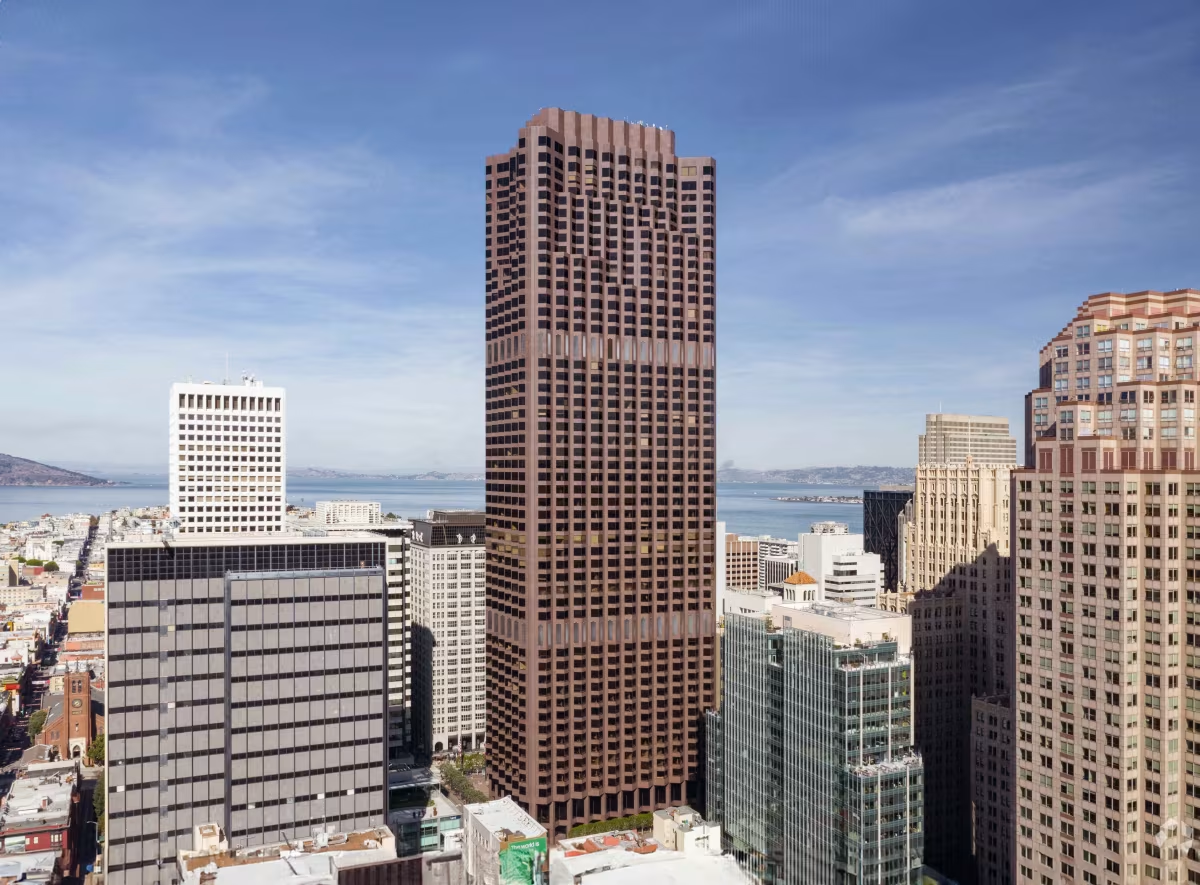
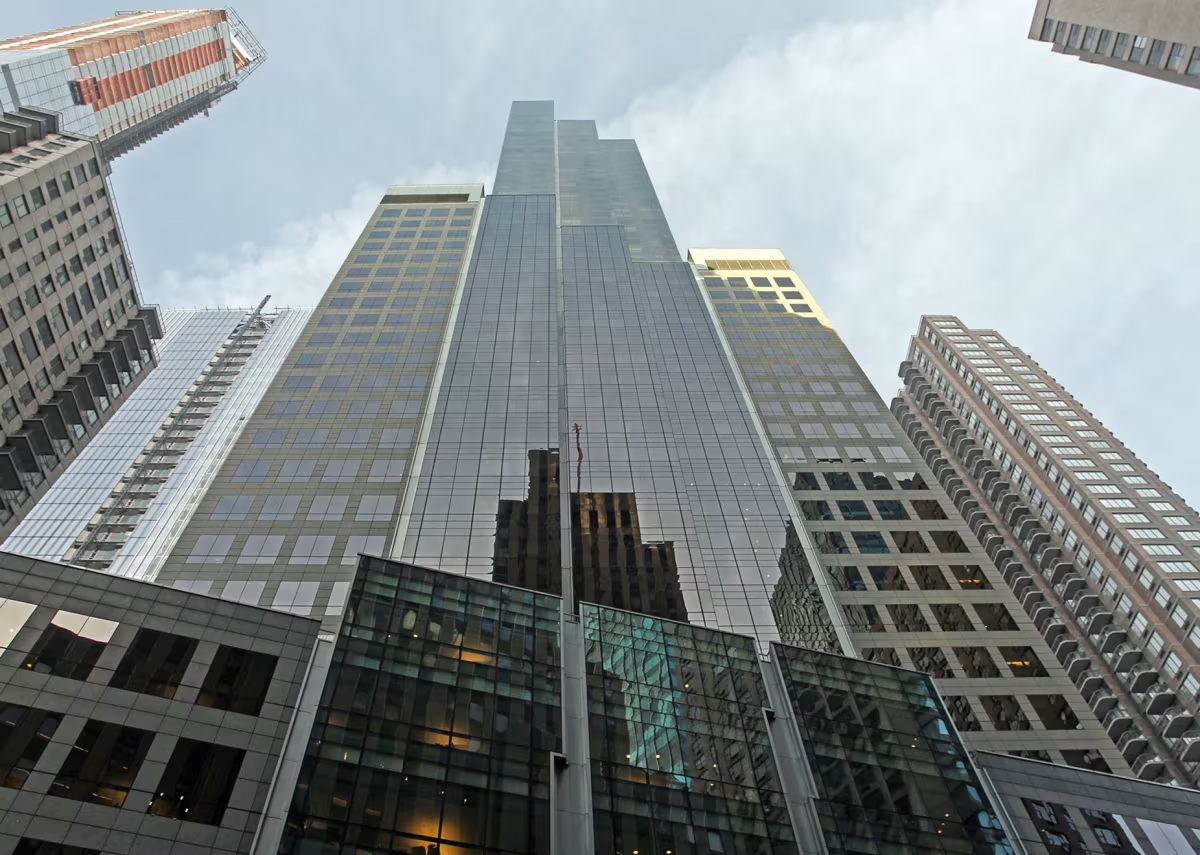
Comparing the 555 California Street Building and the Random House Tower is compelling because they were both designed by Skidmore, Owings & Merrill, yet they stand in different cities (San Francisco, CA and New York, NY), and were completed over two decades apart.
What this will allow us to see, is how the same firm's approach adapted to different places in different periods of time.
Height & Size
Architectural Style
The 555 California Street Building was designed in the Postmodernism style, while the Random House Tower reflects the principles of Contemporary.
The 555 California Street Building was completed when the Postmodernism was still emerging, which gave it a pioneering character. The Random House Tower, on the other hand, followed the more established Contemporary, reflecting the prevailing conventions of its day.Uses
The Random House Tower follows a mixed-use model, combining commercial and residential. In contrast, the 555 California Street Building has remained primarily commercial.
The Random House Tower offers 101 residential units.
Both towers provide significant parking capacity, with 555 California Street Building offering 450 spaces and the Random House Tower offering 150.
Structure & Facade
The two towers rely on different structural systems, reflecting distinct engineering strategies.
The 555 California Street Building uses a Framed Tube In Tube structural system, which combines a strong central core with a perimeter tube of columns, while the Random House Tower uses a Frame system, that relies on a regular grid of columns and beams to sustain its weight.
Yet, when it comes to their facade, they both employed the same solution, a Curtain Wall facade.
A curtain wall is a non-load-bearing facade hung from the structural frame. It is anchored to floor slabs and transfers only its own weight and wind loads, allowing for sleek, glassy exteriors.
| 555 California Street Building | Random House Tower | |
|---|---|---|
| Skidmore, Owings & Merrill | Architect | Skidmore, Owings & Merrill |
| 1967 | Construction Started | 2000 |
| 1969 | Year Completed | 2003 |
| Postmodernism | Architectural Style | Contemporary |
| Commercial | Current Use | Mixed |
| 52 | Floors Above Ground | 52 |
| 4 | Floors Below Ground | 2 |
| 237 m | Height (m) | 208 m |
| Framed Tube In Tube | Structure Type | Frame |
| Steel | Vertical Structure Material | Steel And Reinforced Concrete |
| Concrete, Steel | Horizontal Structure Material | Reinforced Concrete |
| No | Facade Structural? | No |
| Granite, Glass | Main Facade Material | Glass, Steel, Aluminum |
| Dinwiddie Construction | Main Contractor | Plaza Construction Corporation |
| Bank Of American National Trust & Savings Association | Developer | Steve Ross |
| H. J. Brunnier Associates | Structural Engineer | Thornton Tomasetti |
| CA | State | NY |
| San Francisco | City | New York |
| 555 California Street | Address | 1739 Broadway |