425 Park Avenue Building vs Comcast Technology Center
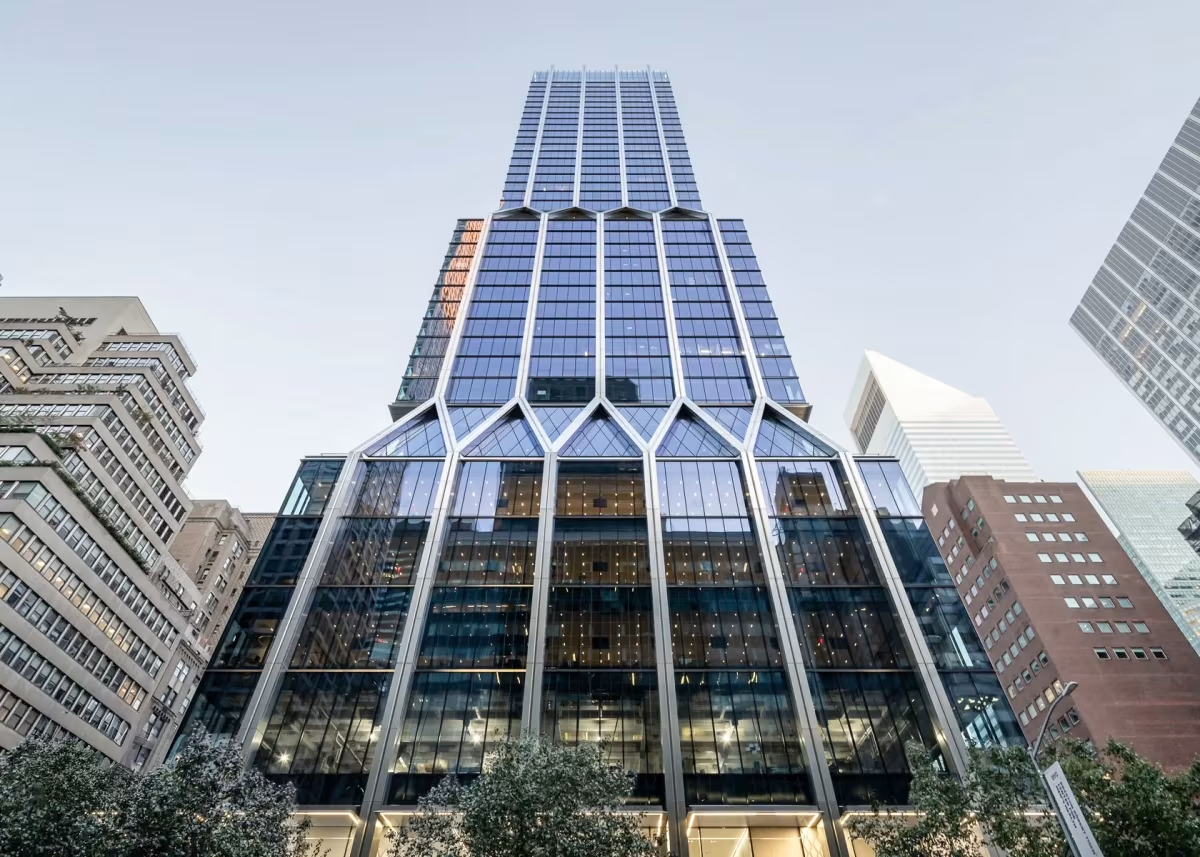
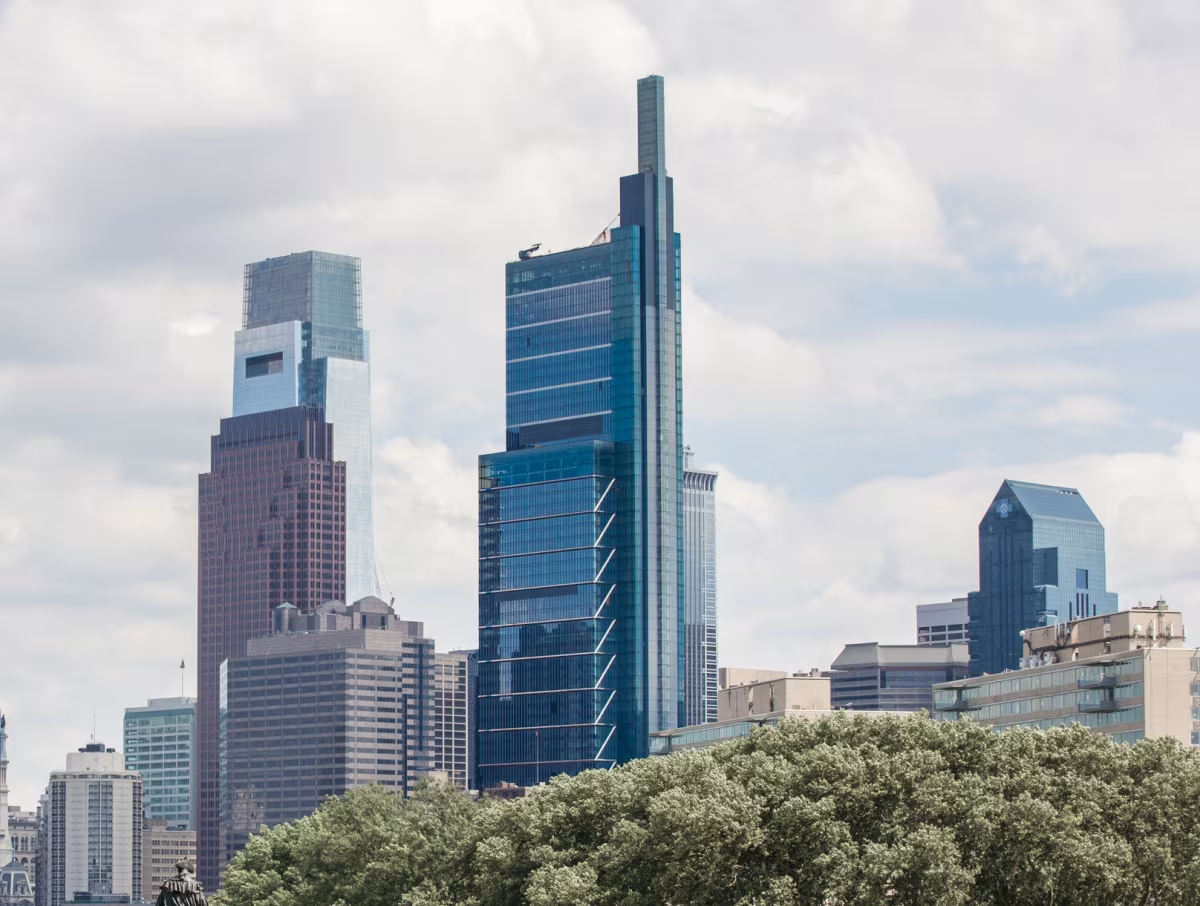
Comparing the 425 Park Avenue Building and the Comcast Technology Center is an interesting exercise, because even though they are located in different cities (New York, NY and Philadelphia, PA), both were designed by Foster + Partners and finished within within 3 years of each other. This gives us the chance to see how the same architect's ideas were expressed in different urban contexts almost simultaneously.
Height & Size
The Comcast Technology Center is clearly the larger tower of the two, both in terms of height and number of floors. It rises to 1112ft (339m) with 59 floors above ground, while the 425 Park Avenue Building reaches 860ft (262m) with 47 floors above ground.
Of course, each project may have faced different briefs or regulatory constraints, which we don't really know about and could also explain the outcome.
Architectural Style
Both the 425 Park Avenue Building and the Comcast Technology Center were designed in line with the aesthetic conventions of the Contemporary style.
At the time, this style was at the height of its popularity. So Foster + Partners followed what was in many ways expected at the time, producing designs that fit comfortably within contemporary architectural norms rather, than breaking with convention.
Uses
The Comcast Technology Center follows a mixed-use model, combining commercial, hotel and retail. In contrast, the 425 Park Avenue Building has remained primarily commercial.
The Comcast Technology Center incorporates a 5-star hotel with 220 rooms. More information is available at the official website.
The 425 Park Avenue Building also provides 52 parking spaces.
Structure & Facade
The two towers rely on different structural systems, reflecting distinct engineering strategies.
The 425 Park Avenue Building uses a Frame structural system, which relies on a regular grid of columns and beams to sustain its weight, while the Comcast Technology Center uses a Trussed Tube In Tube system, that combines a central core with a perimeter tube reinforced by diagonal bracing.
Yet, when it comes to their facade, they both employed the same solution, a Curtain Wall facade.
A curtain wall is a non-load-bearing facade hung from the structural frame. It is anchored to floor slabs and transfers only its own weight and wind loads, allowing for sleek, glassy exteriors.
| 425 Park Avenue Building | Comcast Technology Center | |
|---|---|---|
| Foster + Partners | Architect | Foster + Partners |
| 2012 | Design Ended | 2014 |
| 2016 | Construction Started | 2014 |
| 2022 | Year Completed | 2019 |
| Contemporary | Architectural Style | Contemporary |
| Commercial | Current Use | Mixed |
| 47 | Floors Above Ground | 59 |
| 262 m | Height (m) | 339 m |
| Frame | Structure Type | Trussed Tube In Tube |
| Steel | Vertical Structure Material | Steel |
| Poured Concrete Over Metal Decking | Horizontal Structure Material | Poured Concrete Over Metal Decking |
| Yes | Facade Structural? | No |
| Glass, Steel | Main Facade Material | Glass, Steel |
| Tishman Construction | Main Contractor | L. F. Driscoll |
| L&L Holding Company | Developer | Liberty Property Trust |
| WSP | MEP Engineer | BALA Engineers |
| WSP Cantor Seinuk | Structural Engineer | Thornton Tomasetti |
| Permasteelisa Group | Facade Consultant | Vidaris |
| NY | State | PA |
| New York | City | Philadelphia |
| 425 Park Avenue | Address | 1800 Arch Street |