3 Park Avenue Building vs 550 Madison Avenue
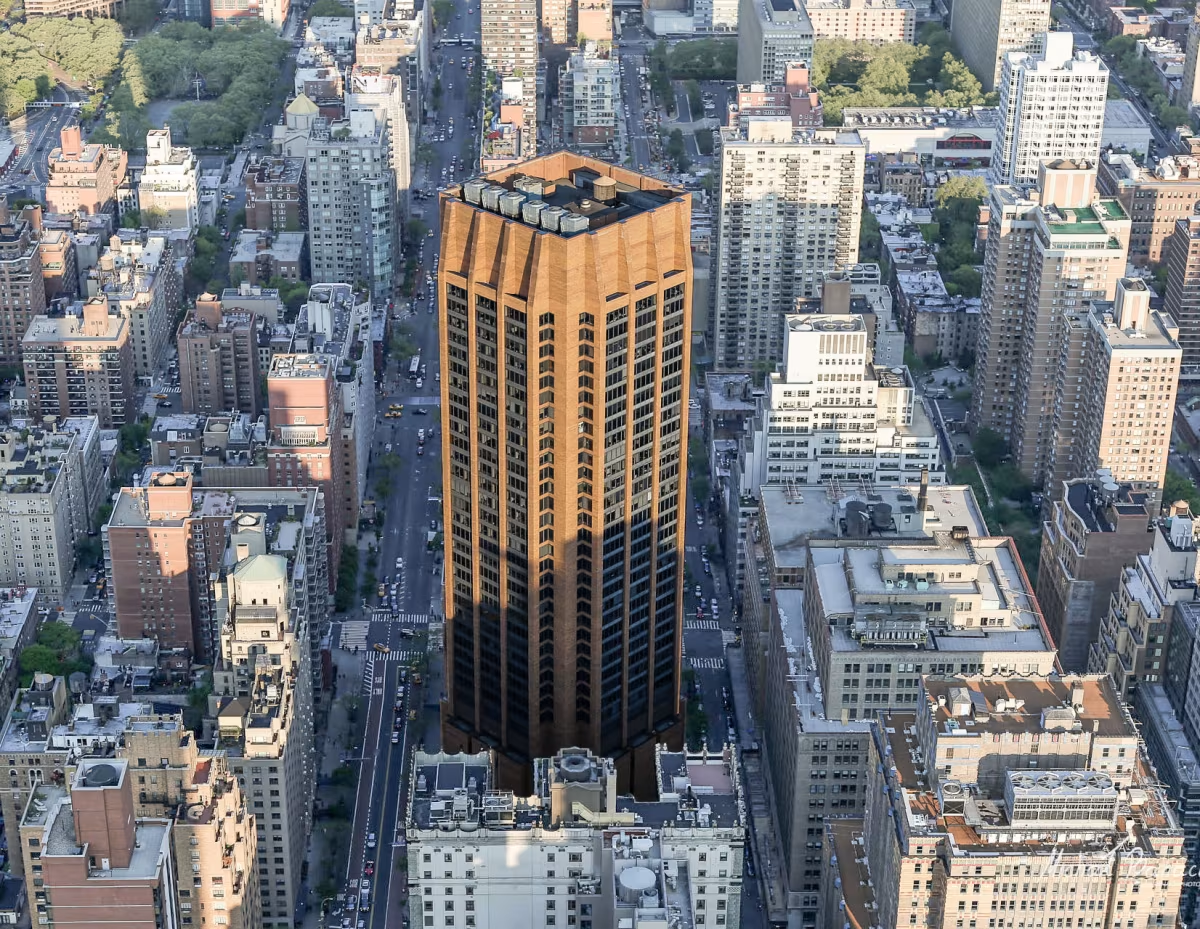
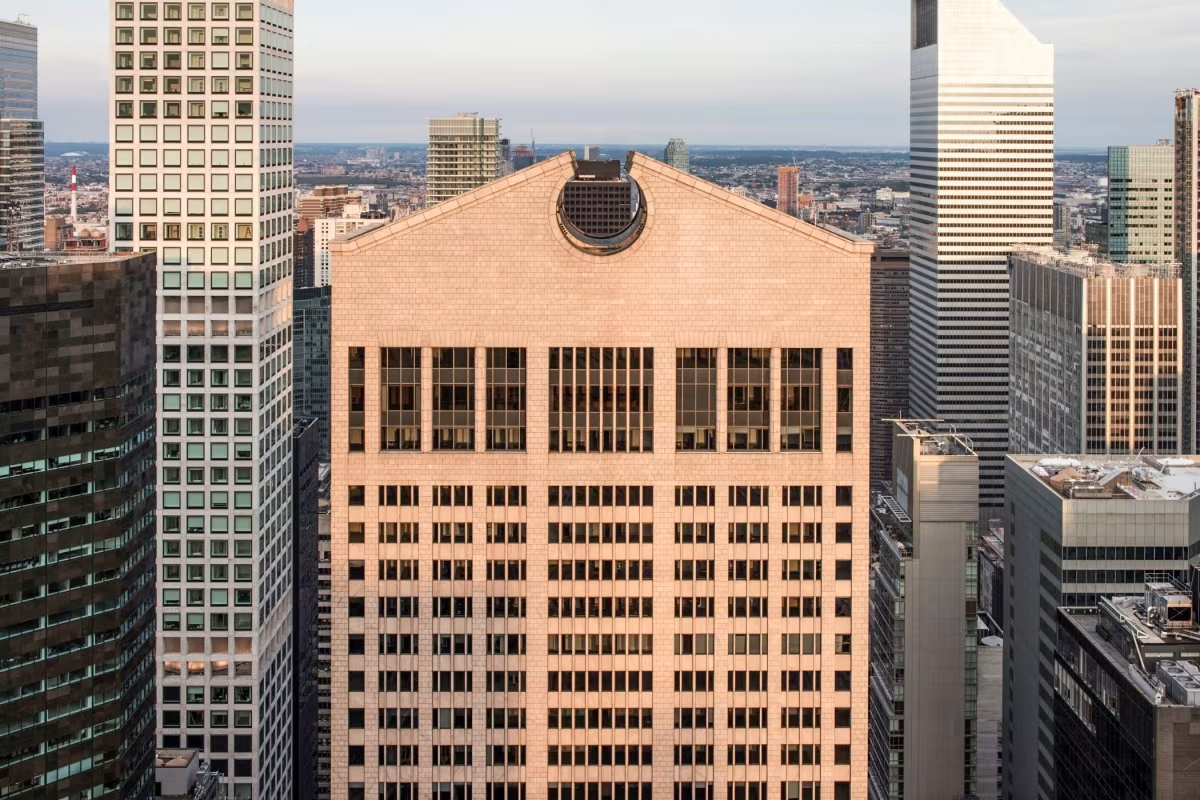
Comparing the 3 Park Avenue Building and the 550 Madison Avenue is interesting because they both rise in New York, NY, yet they were conceived by two different design teams, Shreve, Lamb and Harmon and Johnson/Burgee Architects, and were completed at different points in time. They were finished more than 9 years apart.
This contrast within the same city allows us to see how different creative minds interpreted the evolving needs of New York across time.
Let's take a closer look!
Height & Size
These two towers present an interesting contrast in their proportions. The 550 Madison Avenue rises higher at 646ft (197m), while the 3 Park Avenue Building reaches 554ft (169m). However, the 3 Park Avenue Building accommodates more floors with 42 levels above ground, compared to 37 floors in the 550 Madison Avenue.
This suggests different approaches to interior space design. The 550 Madison Avenue has an average floor-to-floor height of approximately 5.3m, while the 3 Park Avenue Building has more compact floors averaging around 4m each. The taller building's more generous floor heights might indicate grander interior spaces, higher ceilings, or different programmatic requirements.
These different proportions likely reflect the specific needs each building was designed to serve, whether driven by zoning regulations, client requirements, or the intended use of the spaces within. The contrast shows how architects can achieve different spatial experiences even when working with similar overall building scales.
Architectural Style
Both the 3 Park Avenue Building and the 550 Madison Avenue were designed in line with the aesthetic conventions of the Postmodernism style.
At the time, this style was at the height of its popularity. So both Shreve, Lamb and Harmon and Johnson/Burgee Architects followed what was in many ways expected of them, producing designs that fit comfortably within contemporary architectural norms, rather than breaking with convention.
Uses
Both the 3 Park Avenue Building and the 550 Madison Avenue were designed to serve as commercial towers, and that has remained their main use since their completion, serving similar roles in the urban fabric.
The 550 Madison Avenue also provides 20 parking spaces.
Structure & Facade
Both towers share the same structural solution, a Frame system.
A frame structure uses a grid of columns and beams to carry the building's loads. This frees the walls from structural duties, allowing for flexible floor plans and larger windows.
However, when it comes to the facade, both buildings use different approaches. The 3 Park Avenue Building uses a Window Wall facade, while the 550 Madison Avenue uses a Modular facade.
A Window Wall facade like the one seen in the 3 Park Avenue Building uses panels fitted between floor slabs, leaving slab edges visible, while a modular facade like the one seen in the 550 Madison Avenue employs prefabricated panels, often mixing solid surfaces with smaller windows.
| 3 Park Avenue Building | 550 Madison Avenue | |
|---|---|---|
| Shreve, Lamb and Harmon | Architect | Johnson/Burgee Architects |
| 1975 | Year Completed | 1984 |
| Postmodernism | Architectural Style | Postmodernism |
| Commercial | Current Use | Commercial |
| 42 | Floors Above Ground | 37 |
| 169 m | Height (m) | 197 m |
| 58064 | Built-up Area (m²) | 76180 |
| 12 | Number of Elevators | 25 |
| Frame | Structure Type | Frame |
| Reinforced Concrete | Vertical Structure Material | Steel |
| Reinforced Concrete | Horizontal Structure Material | Concrete And Steel |
| Yes | Facade Structural? | Yes |
| Bricks, Glass, Metal | Main Facade Material | Granite, Glass |
| Rosenwasser/Grossman Consulting Engineers | Structural Engineer | Leslie E. Robertson Associates |
| Irving Marantz | Collaborating Artist | Evelyn Beatrice Longman, And Dorothea Rockburne |
| NY | State | NY |
| New York | City | New York |
| 3 Park Avenue | Address | 550 Madison Avenue |