140 Broadway vs Random House Tower
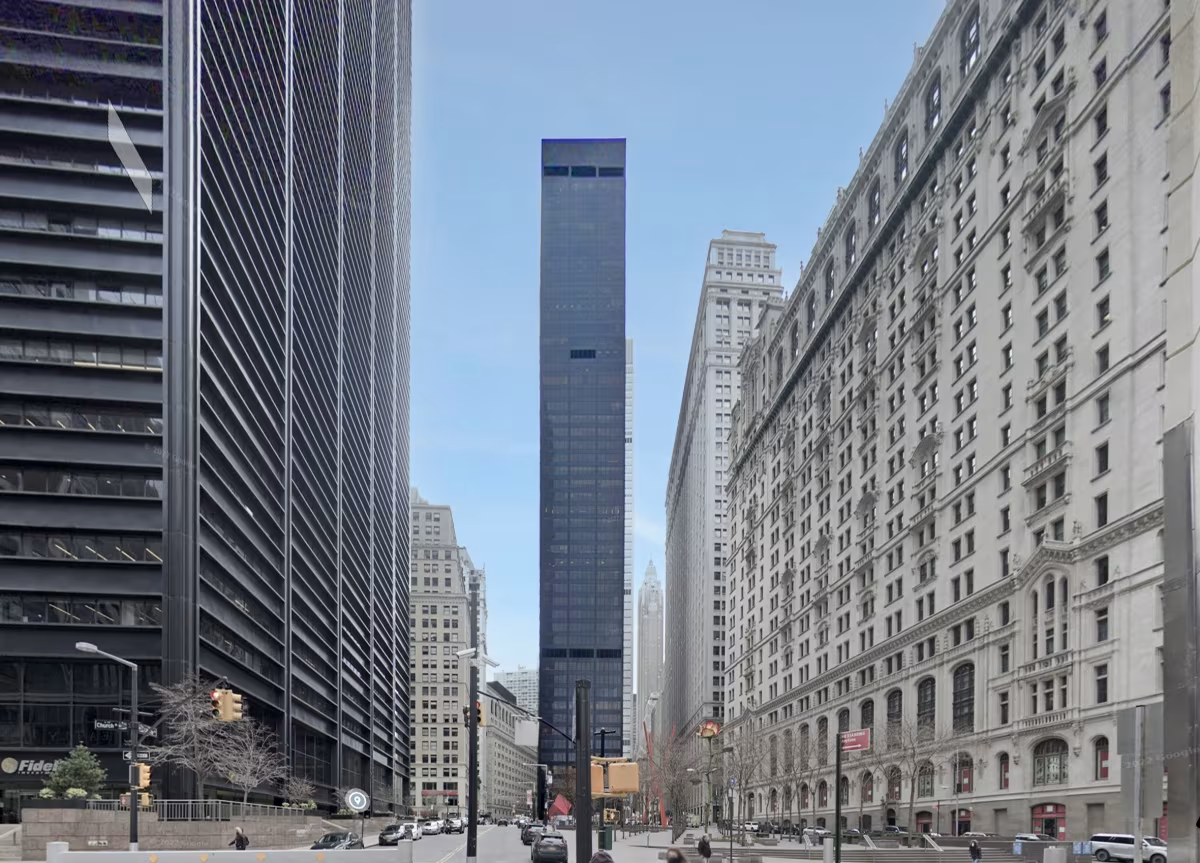
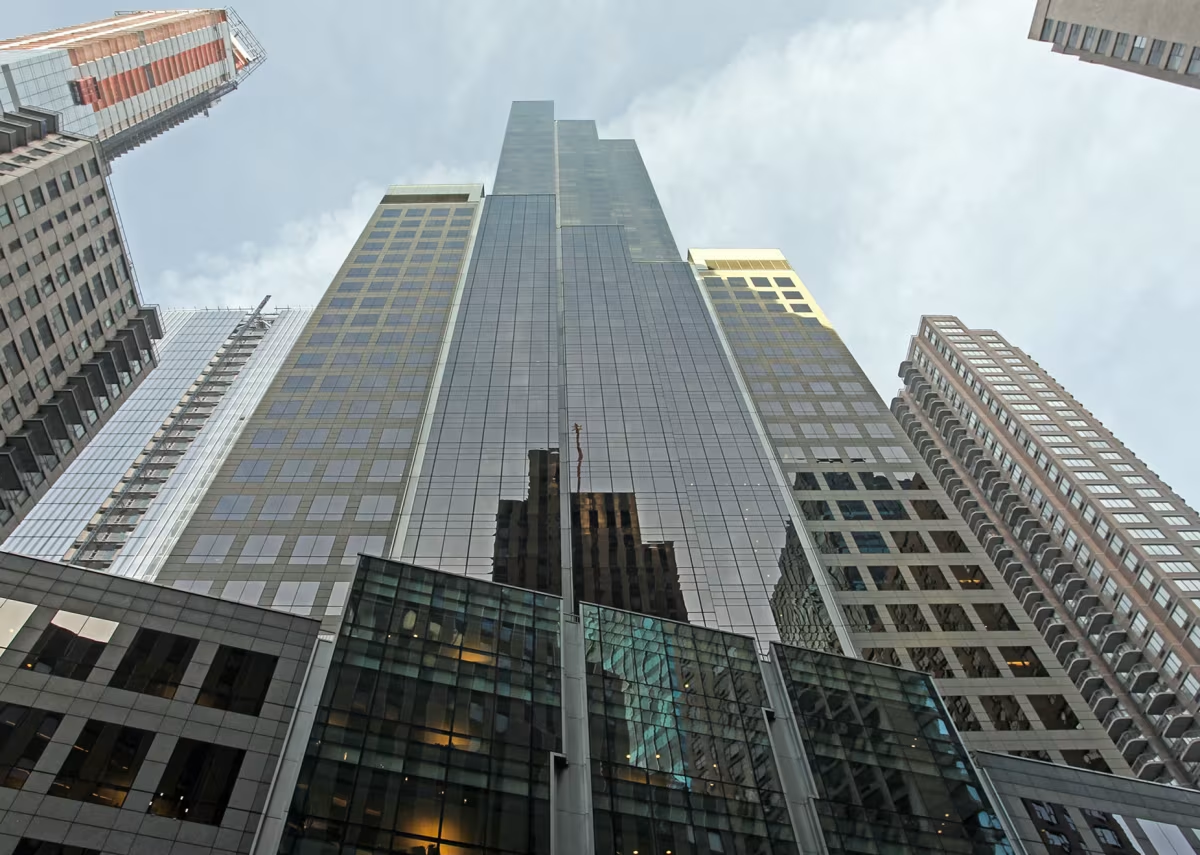
Comparing the 140 Broadway and the Random House Tower is particularly interesting because they share the same skyline in New York, NY, and were both designed by Skidmore, Owings & Merrill. However, they were completed more than 36 years apart.
This offers a unique perspective on how the architect's style and the city's architecture evolved over time.
Height & Size
Architectural Style
The 140 Broadway was designed in the International Style style, while the Random House Tower reflects the principles of Contemporary.
At the time of their completion, both styles were well established. This makes the comparison especially interesting, because both buildings represent a dominant aesthetic at a particular point in time.Built 36 years apart (1967 vs 2003), these two buildings are a perfect example of how different architectural styles have shaped the architectural landscape of our cities over time.
Uses
The Random House Tower follows a mixed-use model, combining commercial and residential. In contrast, the 140 Broadway has remained primarily commercial.
The Random House Tower offers 101 residential units.
The Random House Tower also provides 150 parking spaces.
Structure & Facade
Both the 140 Broadway and the Random House Tower rely on a Frame structural system.
A frame structure uses a grid of columns and beams to carry the building's loads. This frees the walls from structural duties, allowing for flexible floor plans and larger windows.
They also employ the same type of facade, a Curtain Wall facade.
A curtain wall is a non-load-bearing facade hung from the structural frame. It is anchored to floor slabs and transfers only its own weight and wind loads, allowing for sleek, glassy exteriors.
| 140 Broadway | Random House Tower | |
|---|---|---|
| Skidmore, Owings & Merrill | Architect | Skidmore, Owings & Merrill |
| 1964 | Construction Started | 2000 |
| 1967 | Year Completed | 2003 |
| International Style | Architectural Style | Contemporary |
| Commercial | Current Use | Mixed |
| 52 | Floors Above Ground | 52 |
| 3 | Floors Below Ground | 2 |
| 210 m | Height (m) | 208 m |
| 116,129 m² | Usable Area (m²) | 79,900 m² |
| Frame | Structure Type | Frame |
| Steel | Vertical Structure Material | Steel And Reinforced Concrete |
| Concrete | Horizontal Structure Material | Reinforced Concrete |
| No | Facade Structural? | No |
| Aluminum, Glass | Main Facade Material | Glass, Steel, Aluminum |
| Diesel Construction Company | Main Contractor | Plaza Construction Corporation |
| Erwin S. Wolfson | Developer | Steve Ross |
| James Ruderman | Structural Engineer | Thornton Tomasetti |
| NY | State | NY |
| New York | City | New York |
| 140 Broadway | Address | 1739 Broadway |